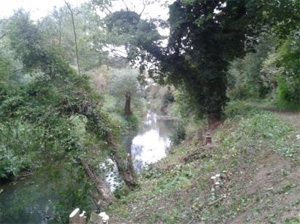
Newly cleared section of the River Beane
Below is the October 2013 newsletter from Herts and Middlesex Wildlife Trust. If you’d like to see what they do, or get involved, you can visit their website here.
The lovely summer has seen the wildlife thriving on the heath. Areas that we have been working on over the past couple of years have recovered. In particular the settling beds on the south heath where a lot of willow trees were removed a couple of years ago have been covered in flowers. The River Beane which had a number of the large Willows on the West bank re-pollarded has seen more light reaching the water which will help the water plants thrive.
Volunteer works
The Wildlife Trust has also been busy along with our army of volunteers.
There have been 4 volunteer work parties ranging between 4 – 12 volunteers working on various aspects of the site. Lafarge have removed the Black Barns and plans have been agreed to re-profile the area using material on site. In addition to the above work the Goats Rue on the south heath was kindly mowed by Lafarge in early October.
Unfortunately, there have been a number of cases of fly tipping on site, including building waste, a mattress and garden waste. This costs the trust money and time to dispose of it. If you see anyone depositing material onto the site or on the surrounding road verges please call the police, report it to the environmental services department at the council or call the wildlife trust.
During this period the volunteers have undertaken some very important jobs:
- The post and rail fence next to car park on the north heath has been repaired after it was damaged by metal thieves.
- Scrub clearance has been done on both heaths
- The woodland glade on the north heath has been cut and raked which should reduce the domination by nettles.
- The south heath meadow near the picnic bench has been cut and raked
- A test area of brambles on the north heath has been cut and collected using a tractor and flail collector
- Various paths around the site have been cut back to improve access
- Scrub and small trees have been removed from the east bank of the river Beane to improve the light reaching the vegetation which will result in increased biodiversity
Future Works:
The area where the black barns are located will be re-profiled and if possible some new site features created. To reduce the damage to the environment the concrete will be covered by soil from elsewhere on the site.
The volunteers will be busy with various tasks, mending infrastructure, managing the scrub areas, keeping the paths open and installing new benches
In addition the trees on the site will be surveyed for safety and action taken if necessary.